
Introduction
Artificial Intelligence AI is no longer a concept confined to science fiction; it is becoming an integral part of our everyday lives. From voice assistants and autonomous vehicles to smart homes and healthcare innovations, AI is transforming how we interact with technology. As AI continues to evolve, its impact on daily life is poised to grow exponentially, offering new ways to enhance convenience, efficiency, and personal experiences.
This article explores the future of AI in everyday life, examining how emerging technologies will shape the way we live, work, and connect with the world around us.

AI in Smart Homes
The concept of a smart home, where devices and systems are interconnected and automated, has become a reality thanks to AI. By 2025, it is expected that more than 75% of households will have at least one smart device, transforming how we manage our homes. AI powered devices like smart thermostats, lights, and security cameras learn from user preferences and adapt to optimize comfort, energy efficiency, and safety.
For example, AI powered virtual assistants, such as Amazon Alexa and Google Assistant, are already enabling hands free control of household devices, providing personalized recommendations, and improving home security with facial recognition systems. These systems will only become more intelligent as AI evolves, offering deeper insights into household behavior and making smart homes more intuitive.
Why it Matters:
- Enhances convenience and energy efficiency
- Increases home security with AI powered monitoring
- Provides greater control and automation over daily routines

AI in Healthcare
AI is already making a significant impact in the healthcare sector, from diagnostics to personalized treatments. As machine learning algorithms analyze vast amounts of medical data, they are able to identify patterns that human doctors might miss, leading to earlier detection of diseases and more accurate diagnoses. For example, AI algorithms can now analyze medical images, such as X rays and MRIs, to detect abnormalities like tumors or fractures with higher accuracy than traditional methods.
In the future, AI will enable truly personalized healthcare. By analyzing an individual’s genetic makeup, lifestyle, and environmental factors, AI will be able to recommend custom-tailored treatments and predict potential health risks before they manifest. Additionally, AI driven virtual health assistants could provide patients with 24/7 access to medical advice, streamlining the way healthcare is delivered.
Why it Matters:
- Offers early detection and more accurate diagnoses
- Customizes healthcare to individual needs
- Reduces healthcare costs by streamlining operations
AI in Transportation
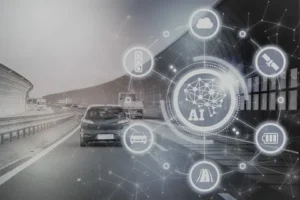
Autonomous vehicles are one of the most anticipated AI driven innovations set to transform daily life. Self driving cars, trucks, and delivery drones promise to change how we commute, transport goods, and even how we perceive road safety. AI technologies such as machine learning, computer vision, and sensor fusion are enabling vehicles to navigate roads, recognize objects, and make decisions in real time.
In the future, AI powered vehicles will work seamlessly with smart infrastructure roads, traffic lights, and signs creating a more efficient and safer transportation system. Additionally, AI will optimize traffic flow by analyzing data from various sources to predict congestion and adjust traffic signals accordingly. The combination of autonomous vehicles and smart infrastructure will revolutionize urban planning and transportation logistics.
Why it Matters:
- Improves safety by reducing human error in driving
- Optimizes traffic flow and reduces congestion
- Creates new business opportunities in logistics and transportation
AI in Retail
AI is revolutionizing the retail industry by enhancing customer experiences and streamlining operations. Retailers are leveraging AI to analyze customer data, predict buying behavior, and offer personalized recommendations, making the shopping experience more tailored to individual preferences. Virtual shopping assistants, powered by AI, are already helping customers find the right products and providing recommendations based on past purchases.
In addition, AI is enabling the automation of various retail processes, such as inventory management, checkout systems, and delivery logistics. AI driven chatbots are also becoming more advanced, offering real-time customer support and assisting with order tracking, making online shopping more convenient and efficient.
Why it Matters:
- Personalizes the shopping experience for customers
- Reduces operational costs through automation
- Enhances customer service with AI driven support tools
AI in Education
AI has the potential to transform education by providing personalized learning experiences for students. Adaptive learning platforms powered by AI can analyze a student’s progress, strengths, and weaknesses, tailoring lessons and exercises to match their unique learning style and pace. This personalized approach will ensure that students receive the support they need to succeed, whether they are struggling with a particular subject or excelling in another.
Additionally, AI is being used to automate administrative tasks, such as grading and curriculum development, allowing educators to spend more time interacting with students. In the future, AI powered tutors will be able to assist students in real time, answering questions and providing additional explanations when needed.
Why it Matters:
- Tailors learning experiences to individual students’ needs
- Increases engagement and learning outcomes
- Reduces administrative burdens on educators
AI in Customer Service
AI is revolutionizing customer service by offering faster, more efficient, and more personalized support. AI powered chatbots and virtual assistants are already handling a significant number of customer inquiries, providing 24/7 support and resolving issues in real-time. These systems use natural language processing NLP to understand customer questions and provide relevant answers, improving the overall customer experience.
In the future, AI driven customer service will become even more advanced, offering seamless interactions across multiple channels, including voice, text, and video. AI will also be able to predict customer needs based on past behavior, allowing businesses to offer proactive solutions and anticipate issues before they arise.
Why it Matters:
- Provides faster and more efficient customer support
- Reduces wait times and improves user satisfaction
- Enhances customer engagement with personalized interactions
AI in Entertainment
AI is transforming the entertainment industry by offering personalized content recommendations and creating immersive experiences. Streaming platforms like Netflix and Spotify already use AI algorithms to recommend movies, shows, and music based on user preferences, providing highly personalized entertainment experiences.
Moreover, AI is playing a significant role in the creation of virtual and augmented reality experiences. In gaming, AI powered characters can adapt to player behavior, providing a more dynamic and engaging experience. AI is also being used in content creation, from generating visual effects to writing scripts, further enhancing the creative process.
Why it Matters:
- Provides tailored content recommendations
- Enhances entertainment experiences with VR and AR
- Revolutionizes the creative process in media and entertainment
AI in Finance
AI is making waves in the finance industry by helping individuals and businesses make smarter financial decisions. AI algorithms can analyze market trends, predict stock movements, and offer personalized investment advice based on individual risk profiles. Fintech companies are leveraging AI to automate tasks such as loan approvals, fraud detection, and customer service, making financial services more efficient and accessible.
In the future, AI will enable more people to engage with financial markets, offering personalized advice and lowering the barrier to entry for individuals looking to invest or manage their wealth. AI powered robo advisors are already transforming how people approach investments, providing low-cost solutions for asset management.
Why it Matters:
- Automates financial tasks, improving efficiency
- Offers personalized investment strategies
- Makes financial services more accessible to the general public
AI in Manufacturing: Enhancing Efficiency and Precision
AI is transforming manufacturing processes by enhancing efficiency, precision, and flexibility. Smart factories, powered by AI, use machine learning algorithms and robotics to monitor production lines, detect anomalies, and make real time adjustments to improve quality and reduce waste. AI is also being used to predict equipment maintenance needs, preventing costly downtime and improving the longevity of machines.
The future of AI in manufacturing will involve more collaboration between humans and robots, with AI driven systems taking over dangerous or repetitive tasks, while workers focus on higher level problem solving and innovation.
Why it Matters:
- Increases operational efficiency and reduces waste
- Enhances product quality and precision
- Improves safety by automating dangerous tasks
AI in Daily Life: The Invisible Assistant
AI is becoming increasingly integrated into our daily lives, often in ways that are invisible to us. From voice assistants like Siri and Alexa to AI driven recommendation systems in apps and websites, AI is quietly improving our experiences. AI powered devices are learning from our habits and preferences, allowing for a more seamless and personalized daily routine.
In the future, AI will become even more ubiquitous, helping us manage tasks, optimize our time, and make decisions with ease. Whether it’s automating household chores, managing our schedules, or offering real time suggestions based on our behavior, AI will be a constant companion, improving efficiency and quality of life.
Why it Matters:
- Enhances convenience by automating everyday tasks
- Increases personalization in digital experiences
- Optimizes daily routines through AI integration
How will AI impact smart homes in the future?
AI will enhance smart homes by automating tasks like temperature control, lighting, and security, making homes more efficient, personalized, and secure.
How will AI revolutionize healthcare?
AI will enable personalized healthcare by analyzing patient data to provide custom treatments, improving diagnosis accuracy and predicting health risks.
What role will AI play in transportation?
AI will drive autonomous vehicles and smart infrastructure, improving road safety, optimizing traffic flow, and transforming how we travel.
How will AI change the retail industry?
AI will personalize shopping experiences by analyzing customer data, offering tailored product recommendations, and automating processes like inventory management.
How can AI transform education?
AI will offer personalized learning, adapting lessons to students’ needs, and automating administrative tasks to allow teachers more time with students.
How is AI enhancing customer service?
AI-powered chatbots and virtual assistants provide 24/7 customer support, handle inquiries efficiently, and offer personalized experiences.
How is AI changing the entertainment industry?
AI will personalize content recommendations, create immersive experiences using VR/AR, and assist in the content creation process, revolutionizing media.
How does AI impact finance?
AI will help with smarter investments, automate financial tasks like loan approvals, and provide personalized financial advice.
How will AI improve manufacturing?
AI will optimize production lines, reduce waste, and enhance product quality by using smart algorithms to monitor and adjust processes in real time.
How is AI integrated into everyday life?
AI will become an invisible assistant, automating daily tasks, managing schedules, and offering real-time suggestions based on individual preferences.
Conclusion
The future of AI in everyday life is bright, offering transformative solutions across a wide range of sectors. From smart homes and healthcare to transportation and entertainment, AI is poised to enhance our daily lives by making tasks more efficient, personalized, and enjoyable. As these technologies continue to evolve, the possibilities for AI to revolutionize everyday life are limitless. Embracing these innovations will not only improve convenience but also empower individuals to live smarter, healthier, and more connected lives.