
Introduction to Crypto Day Trading
Cryptocurrency day trading involves buying and selling digital assets within the same day often within minutes or hours to capitalize on short term price movements. Unlike traditional markets, the crypto market operates 24 hours, creating continuous trading opportunities, but also exposing traders to elevated volatility and risk.
Day trading in crypto requires a disciplined strategy, deep understanding of market dynamics and the technical skills to execute trades efficiently under time pressure.

Market Fundamentals and Structure
Understanding how cryptocurrency markets operate is essential for effective intraday trading. Key components include:
- Crypto Exchanges: Centralized Binance, Coinbase Pro and decentralized Uniswap, dYdX platforms.
- Order Types: Market, limit, stop loss, trailing stop, and conditional orders.
- Liquidity and Slippage: The impact of volume, spread, and market depth on trade execution.
- Volatility Patterns: Cryptocurrencies often exhibit higher intraday price fluctuations than traditional assets, creating both opportunity and risk.
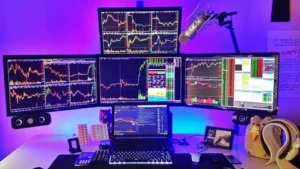
Common Crypto Day Trading Strategies
Trend Following
- Trading in the direction of the prevailing trend using tools like moving averages or trendlines.
- Tools: EMA crossovers, ADX indicator, volume confirmation.
Breakout Trading
- Entering trades as price breaks out of a defined range or key level support and resistance.
- Tools: Bollinger Bands, volume spikes, price consolidation zones.
Scalping
- Executing dozens or hundreds of small trades to profit from minute price movements.
- Tools: Level 2 data, VWAP, order flow analysis.
Mean Reversion
- Betting on price reverting to its average after significant deviation.
- Tools: RSI, Bollinger Bands, Keltner Channels.
Momentum Trading
- Riding strong price action with high volume, entering positions with significant movement potential.
- Tools: MACD, Momentum oscillator, volume analysis.
Technical Analysis Tools
Effective use of technical indicators is key in identifying opportunities:
- Moving Averages SMA, EMA: Trend direction and crossover signals.
- Relative Strength Index RSI: Identifies overbought or oversold conditions.
- MACD: Measures momentum and trend reversals.
- Bollinger Bands: Assesses volatility and price range extremes.
- Volume Indicators: Confirms price action strength or potential reversals.
Entry, Exit, and Trade Management
A day trader must define clear rules to minimize emotion driven decisions:
- Entry Rules: Technical setup, confirmation signal, time of day.
- Stop Loss: Predefined risk limit to cap losses.
- Take Profit: Predetermined level for locking in gains.
- Position Sizing: Based on account size and risk tolerance.
- Risk Reward Ratio: Typically 1:2 or higher for positive expectancy.
Risk Management and Trader Psychology
Risk control is foundational in day trading:
- Capital Allocation: Risking 1 to 2 percent of capital per trade.
- Drawdown Limits: Halting trading after a defined loss threshold.
- Emotional Control: Avoiding revenge trading, overconfidence, or FOMO.
- Discipline: Following the strategy without deviation.
Backtesting and Performance Tracking
Before going live, strategies must be tested using historical data:
- Backtesting Tools: Trading View, Crypto Tester, Python and Pandas.
- Performance Metrics: Sharpe ratio, win rate, profit factor, drawdown.
- Avoid Overfitting: Ensuring robustness across different market conditions.
- Trading Journal: Tracking trade rationale, outcomes, and lessons.
Tools and Platforms for Execution
Professional day traders utilize reliable platforms and tools:
- Charting Tools: Trading View, Crypto Quant, Coin Glass.
- Order Execution: Binance Pro, Bybit, Kraken Pro with fast UI and APIs.
- Bots and Automation: For high-frequency strategies e.g. 3Commas, Coinrule, custom scripts.
- News and Sentiment Sources: CoinDesk, Twitter, Telegram channels, Lunar Crush.
Sample Trades and Case Studies
Include annotated charts and trade logs showcasing:
- Breakout entry and exit
- RSI divergence reversal
- Scalping with volume profile
- Loss example with lessons learned
This section provides real world context for how strategies perform and adapt under changing conditions.
What is crypto day trading?
Crypto day trading involves buying and selling cryptocurrencies within the same day to profit from short term price movements.
Is crypto day trading profitable?
Yes, it can be profitable, but it carries high risk. Success depends on strategy, discipline, risk management, and market conditions.
Which cryptocurrencies are best for day trading?
High liquidity coins like Bitcoin BTC, Ethereum ETH and Solana SOL are commonly used due to tighter spreads and reliable volume.
What is the most used day trading strategy in crypto?
Trend following and breakout strategies are widely used, often supported by technical indicators like EMA, RSI, and MACD.
What tools do crypto day traders use?
They use platforms like Trading View for charting, exchanges like Binance or Kraken for execution, and bots or APIs for automation.
What are the risks of crypto day trading?
Major risks include market volatility, leverage losses, emotional trading, slippage, and lack of risk control.
Do I need a lot of capital to start?
No, but starting with sufficient capital $500 to $2,000 helps absorb losses and learn effectively without excessive pressure.
How do I manage risk in day trading?
Use stop loss orders, limit position size to 1 to 2 percent of capital per trade, and never chase losses.
Is technical analysis necessary for day trading?
Yes, most crypto day traders rely heavily on technical indicators, price patterns, and volume analysis to time entries and exits.
Can I automate my day trading strategy?
Yes, automated trading using bots or scripts can execute predefined strategies efficiently, but they still require oversight and risk control.
Conclusion
Day trading cryptocurrencies offers compelling potential but demands sharp execution, emotional discipline, and technical mastery. Traders who consistently manage risk, backtest their methods, and evolve with market conditions are best positioned to succeed in this volatile space.