
Crypto futures trading offers substantial opportunities for profit, but it also comes with inherent risks due to the volatility of the digital asset market. To succeed, traders must approach futures trading with a well defined strategy, incorporating rigorous risk management, technical analysis, and psychological discipline. The following strategies, framed within the Koray Framework, will help guide traders toward success in this complex market.
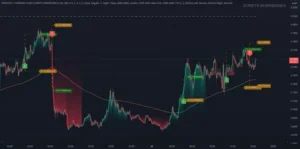
Capturing Market Momentum
Objective
The primary goal is to identify and align trades with the prevailing market trend. This strategy assumes that trends tend to continue in the short to medium term.
Implementation Strategy
- Trend Identification: Utilize technical indicators such as Moving Averages, for example, 50 day, 200day MA, to identify uptrends or downtrends. Trendlines and market structure, higher highs, higher lows, further confirm trend direction.
- Entry and Exit: Enter long positions in a bullish market or short positions in a bearish market. Leverage trend following indicators like the Average Directional Index, ADX, to assess trend strength.
- Risk Management: Apply trailing stop loss orders to lock in profits as the market moves in your favor, adjusting levels according to volatility.
Psychological Discipline
Remain patient and avoid counter trend trades that often arise from emotional decisions.

Profiting from Small Price Movements
Objective
Scalping involves executing numerous quick trades to capture small price movements, often within minutes or hours. The key focus is on liquidity and speed.
Implementation Strategy
- Timeframe and Tools: Focus on lower timeframes, 1 to 5 minutes, and employ tools such as the Relative Strength Index, RSI, and Bollinger Bands for identifying overbought or oversold conditions.
- Liquidity: Ensure the selected asset has sufficient liquidity to enter and exit positions quickly without slippage.
- Leverage: Carefully use leverage to amplify small price movements. Begin with conservative leverage ratios to mitigate risk.
Risk Management
Utilize tight stop loss levels and ensure trading costs, commissions, and spreads do not erode profits.
Capturing Short Term Price Swings
Objective
Swing trading aims to profit from price fluctuations over several days or weeks. This strategy exploits market corrections and rallies within the broader trend.
Implementation Strategy
- Technical Setup: Identify key support and resistance levels using Fibonacci retracements, pivot points, and candlestick patterns to anticipate price reversals.
- Indicators: Employ oscillators like RSI and Stochastic to spot overbought or oversold conditions, signaling potential entry points.
- Trade Duration: Positions are typically held from a few days to several weeks, depending on the strength of the trend and market conditions.
Psychological Discipline
Control the temptation to exit prematurely or re-enter too early. Stick to the plan and respect your technical signals.
Exploiting Price Inefficiencies Across Markets
Objective
Arbitrage takes advantage of price discrepancies between different exchanges or markets for the same crypto asset. This strategy relies on fast execution and low transaction costs.
Implementation Strategy
- Market Research: Constantly monitor multiple exchanges for price disparities in the same asset. Automated tools or bots can help to detect and act upon opportunities in real time.
- Execution: Ensure that trades are executed swiftly to lock in profits before the price differential converges. Use market orders to ensure immediate execution.
- Risk Factors: Take into account transaction fees, withdrawal times, and slippage, as these factors can reduce profitability.
Risk Management
Only engage in arbitrage when the price difference justifies the transaction costs. Automation and bots are crucial for maximizing efficiency and profitability.
Mitigating Risk Exposure
Objective
Hedging aims to reduce potential losses from adverse price movements by taking an opposite position in the futures market relative to an existing spot position.
Implementation Strategy
- Portfolio Diversification: If you hold a long position in a cryptocurrency, consider opening a short position in the futures market to mitigate potential downside risk.
- Hedge Ratio: Determine the appropriate hedge ratio based on the size of your positions, the volatility of the underlying asset, and your risk tolerance.
- Adjustment: Regularly monitor and adjust the hedge as market conditions evolve.
Risk Management
Hedging does not guarantee profits but serves as a risk management tool to protect against extreme market moves.
Risk Management and Position Sizing
Objective
Effectively managing risk is the cornerstone of successful futures trading. It involves not only controlling losses but also ensuring that the potential for reward justifies the risk undertaken.
Implementation Strategy
- Position Sizing: Use the Kelly Criterion or fixed-percentage risk models to determine optimal position sizes. Never risk more than a small percentage of your portfolio on a single trade.
- Stop Loss and Take Profit Orders: Set stop-loss orders to limit potential losses and take-profit orders to lock in gains at predetermined levels. Adjust these levels based on volatility and trade duration.
- Leverage Management: Apply leverage cautiously. Start with low leverage, especially if you are new to crypto futures trading, and increase only when you have a solid grasp of risk management.
Psychological Discipline
Avoid emotional decisions, particularly in high stress scenarios. Stick to your predefined risk parameters.
Technical Analysis and Charting Tools
Objective
Technical analysis, TA, forms the backbone of crypto futures trading. It allows traders to make informed decisions based on historical price data and market trends.
Implementation Strategy
- Chart Patterns: Utilize chart patterns, for example, head and shoulders, double top/bottom, to forecast future price movements.
- Indicators: Integrate tools such as Moving Averages, RSI, MACD, and Bollinger Bands to confirm entry and exit signals.
- Volume Analysis: Analyze trading volumes in conjunction with price movements to validate the strength of trends.
Psychological Discipline
While technical indicators provide guidance, always avoid over reliance on them without considering broader market factors.
Emotional Control and Psychological Discipline
Objective
Psychological discipline is paramount in futures trading, as emotional responses can lead to impulsive decisions, significantly impacting overall performance.
Implementation Strategy
- Predefined Rules: Develop a trading plan with clear rules regarding entry, exit, and risk management. Stick to these rules regardless of market conditions.
- Patience: Be patient with market movements, avoiding the urge to chase quick profits or make emotional decisions.
- Mindfulness: Regularly evaluate your emotional state and avoid trading during times of stress or heightened emotions.
Risk Management
Mental fatigue and emotional instability can lead to poor decision making. Practice proper self discipline and take breaks as necessary.
What is crypto futures trading?
Crypto futures trading involves buying or selling contracts that represent the future price of a cryptocurrency, allowing traders to speculate on price movements without owning the asset.
What is leverage in crypto futures?
Leverage allows traders to control a larger position with a smaller amount of capital by borrowing funds from the exchange. It increases both potential profits and risks.
What is a stop loss order?
A stop loss order automatically triggers a sale when the price of an asset falls to a specified level, helping to limit potential losses in a trade.
How is swing trading different from scalping?
Swing trading aims to profit from price movements over several days or weeks, while scalping focuses on making quick trades to capture small price movements within minutes or hours.
What does hedging mean in crypto futures?
Hedging involves taking an opposite position in a futures market to offset the potential losses in a related spot position, reducing overall risk.
What is an arbitrage strategy?
Arbitrage is the practice of exploiting price differences for the same cryptocurrency across different exchanges by buying low on one exchange and selling high on another.
What role do technical indicators play in crypto futures trading?
Technical indicators, such as moving averages or RSI, help traders analyze past price data to predict future price movements and make informed trading decisions.
What is a margin call in futures trading?
A margin call occurs when the value of a trader account falls below the required margin level, forcing the trader to deposit more funds or close positions to meet the margin requirements.
What is the role of risk management in futures trading?
Risk management involves strategies like setting stop loss orders, using appropriate position sizes, and diversifying to minimize losses and protect capital in volatile markets.
What is the difference between a long and a short position?
A long position means buying a cryptocurrency in anticipation of its price rising, while a short position means selling it in anticipation of its price falling.
Conclusion
Crypto futures trading offers high reward potential but requires a structured approach to manage the risks effectively. By following the strategies outlined above and adhering to sound risk management practices, traders can position themselves for success in this volatile market. Consistent use of technical analysis, risk mitigation, and psychological discipline will ensure a methodical and sustainable approach to crypto futures trading.