
Introduction
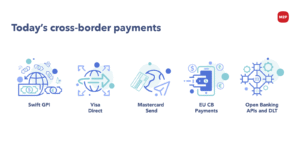
In today globalized economy, cross border payments are essential for both businesses and consumers alike. From international trade to personal remittances, transferring money across borders has been a fundamental part of financial transactions. However, traditional systems for cross border payments, such as through banks, have long been plagued by high fees, slow processing times, and a lack of transparency.
In response to these challenges, fintech has emerged as a transformative force. By leveraging technology to streamline and enhance the payments process, fintech is making cross border transactions faster, more affordable, and accessible. In this article, we will explore how fintech innovations are improving the speed and cost effectiveness of international payments and what this means for consumers and businesses.
The Challenges of Traditional Cross Border Payments
High Costs and Hidden Fees
Traditional cross border payment methods, particularly those facilitated by banks and legacy financial institutions, often come with steep fees. These include service charges, exchange rate markups, and intermediary fees, which can significantly increase the cost of transferring money internationally. In some cases, the recipient may also incur additional charges upon receiving funds.
Slow Processing Times
Cross border payments through traditional banking systems can take several days to process, especially if multiple intermediaries are involved. For businesses that rely on quick payments or individuals sending money for urgent needs, these delays can be frustrating and costly.
Lack of Transparency
Traditional cross border payment systems are often criticized for their lack of transparency. Customers may not fully understand the fees they will incur or how long their transactions will take. This uncertainty can lead to frustration and dissatisfaction.
Limited Accessibility
Access to traditional cross border payment services can be limited in certain regions, particularly in developing countries. In some cases, people in rural or underserved areas may lack access to financial institutions that can process international payments.

Fintech Role in Revolutionizing Cross Border Payments
Speed and Efficiency
One of the most significant advantages of fintech solutions is the speed at which they process cross border payments. Unlike traditional banking systems that rely on multiple intermediaries and can take days to complete transactions, fintech platforms can offer near instantaneous or same day transfers. This is particularly important for businesses that operate in global markets and need to make payments quickly to maintain smooth operations.
Lower Transaction Costs
By removing intermediaries and streamlining the payment process, fintech has dramatically reduced the cost of cross border payments. For example, platforms like Wise formerly TransferWise charge lower fees compared to traditional banks, providing a more cost effective solution for sending money internationally.
Transparency
Many fintech platforms offer greater transparency compared to traditional methods. Services like Wise and Revolut provide real time exchange rate information, and customers can track their transactions every step of the way, making it easier to understand how much a transfer will cost and how long it will take.
Financial Inclusion
Fintech solutions have also made cross border payments more accessible, especially for individuals in underserved or unbanked regions. By leveraging mobile technology and digital wallets, fintech platforms are offering people without access to traditional banking services the ability to send and receive money globally.
Key Fintech Innovations Making Cross Border Payments Faster and Cheaper
Blockchain Technology
Blockchain technology is one of the most disruptive innovations in the fintech space, particularly when it comes to cross-border payments. Blockchain allows for secure, decentralized transactions without the need for intermediaries like correspondent banks. This eliminates the fees and delays typically associated with traditional payment methods.
Ripple is a prime example of a blockchain based payment solution. It enables financial institutions to process cross-border payments in seconds, rather than days, at a fraction of the cost.
Benefits of Blockchain for Cross Border Payments:
- Faster Transactions: Payments can be processed in minutes or seconds, regardless of the geographical location.
- Lower Costs: Blockchain eliminates the need for intermediaries, reducing transaction fees.
- Transparency: Blockchain public ledger allows all parties to verify the transaction in real time, increasing transparency.
Cryptocurrencies
Cryptocurrencies, particularly Bitcoin and Ethereum, have also made their mark in the realm of cross border payments. Cryptocurrencies are not tied to any central bank, which means they can be used to send money across borders without the need for banks or currency exchanges.
Stable coins, such as Tether USDT and USD Coin USDC, are particularly useful for cross border payments because they are pegged to stable assets like the US dollar, reducing the volatility associated with traditional cryptocurrencies.
Benefits of Using Cryptocurrencies for Cross Border Payments:
- Low Transaction Fees: Cryptocurrency transactions typically have lower fees than traditional bank transfers.
- Fast Transactions: Cryptocurrency transfers can be processed within minutes, compared to the days required for traditional methods.
- Global Accessibility: Cryptocurrencies can be accessed by anyone with an internet connection, making them ideal for people in regions with limited access to banking services.
Digital Payment Platforms
Digital payment platforms like PayPal, Venmo, Revolut, and TransferWise Wise are becoming increasingly popular for cross border payments. These platforms provide an easy, convenient way to send money internationally using just a smartphone or computer. Many of these services offer low fees and competitive exchange rates, making them an attractive alternative to traditional banking.
How Digital Payment Platforms Improve Cross Border Payments:
- Convenience: Users can send and receive payments globally using just a smartphone or computer.
- Low Fees: Digital payment platforms typically charge lower fees than traditional banks.
- Real Time Exchange Rates: Some platforms, like Revolut, offer real time exchange rates, ensuring that users get the best deal.
Mobile Payments and Peer to Peer P2P Systems
Mobile payment solutions such as Apple Pay, Google Pay, and Samsung Pay are transforming the way consumers make cross border payments. These mobile wallets store user payment information and allow them to make fast, secure payments directly from their smartphones.
P2P payment systems, like Venmo and Zelle, are also revolutionizing cross border transactions, particularly for personal remittances. These systems enable users to send money directly to another individual, bypassing traditional banking systems and reducing costs.
Benefits of Mobile Payments for Cross Border Transactions:
- Speed: Transactions are almost instantaneous, allowing users to send and receive payments within seconds.
- Low Costs: Mobile payments typically have lower fees than traditional methods, making them an affordable solution for consumers.
- Security: Mobile payment systems use encryption and tokenization to ensure that transactions are secure.
Real World Applications of Fintech in Cross Border Payments
Case Study Wise formerly TransferWise
Wise is a leading example of a fintech company transforming the cross border payment landscape. The company uses its proprietary technology to offer low cost international money transfers by using the real exchange rate and charging only a small fee.
How Wise Improves Cross Border Payments:
- No Hidden Fees: Wise offers transparent pricing with no hidden fees, which is uncommon in traditional bank transfers.
- Real Exchange Rates: Wise uses the real exchange rate the one you see on Google, ensuring that customers get the best deal.
- Fast Transactions: Most transactions are completed within one or two business days.
Case Study Ripple XRP
Ripple blockchain technology is being used by financial institutions around the world to facilitate fast, low cost cross border payments. By bypassing traditional financial systems, Ripple can process payments in seconds and charge a fraction of the fees associated with traditional methods.
Ripple Impact on Cross Border Payments:
- Faster Payments: Ripple enables near instantaneous payments across borders.
- Lower Fees: Ripple technology significantly reduces transaction fees.
- Cross-Border Network: Ripple network connects hundreds of financial institutions around the world, making it easier to send money across borders.
The Future of Cross Border Payments in the Fintech Industry
The Rise of Central Bank Digital Currencies CBDCs
Governments and central banks around the world are exploring the development of their own digital currencies, known as Central Bank Digital Currencies CBDCs. These government-backed digital currencies could play a major role in the future of cross border payments, providing a more stable and secure alternative to cryptocurrencies.
How CBDCs Will Change Cross Border Payments:
- Faster Settlements: CBDCs could enable near instantaneous settlement of cross border transactions.
- Lower Costs: By eliminating intermediaries, CBDCs could lower the cost of international payments.
- Increased Security: CBDCs will be backed by governments, providing a more secure alternative to cryptocurrencies.
Continued Adoption of Fintech Solutions
As fintech continues to innovate, the adoption of digital payment platforms, blockchain, and cryptocurrencies will only grow. More financial institutions are likely to embrace these technologies, further driving down costs and increasing the speed of cross border payments.
-
The Role of AI and Machine Learning: The integration of AI and machine learning in cross border payments will enhance fraud detection and optimize the payment process.
Conclusion
Fintech is transforming the way cross border payments are made, offering faster, cheaper, and more transparent solutions than traditional banking systems. By leveraging blockchain, cryptocurrencies, digital payment platforms, and mobile payment systems, fintech companies are making it easier for individuals and businesses to send money globally. As these innovations continue to evolve, we can expect even greater improvements in the speed, cost, and accessibility of cross-border payments, bringing significant benefits to the global economy.